

Cellular Nutrition is Key to Optimal Health
In our last article, we explored how free radicals can damage cells and even alter DNA. If this damage continues unchecked, it leads to oxidative stress, which is a key driver behind aging and the majority of degenerative diseases.
So, what’s the solution to this ongoing cellular damage?
Cellular Nutrition: The Key to Health
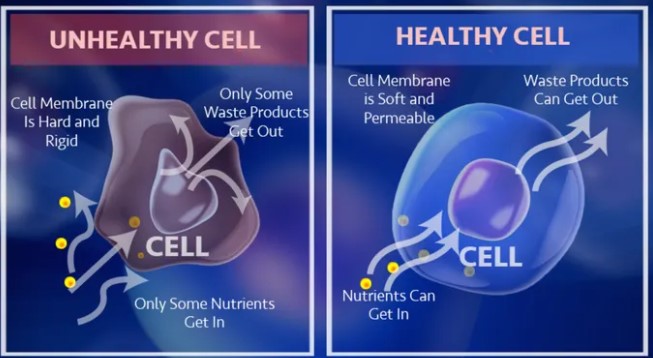
The answer lies in cellular nutrition. This concept is simple yet powerful: it’s about providing every cell in the body with the nutrients it needs to function optimally.
Interestingly, many people do not receive enough of certain essential nutrients through diet alone to meet the recommended daily intake (RDI) outlined by the NHMRC (National Health and Medical Research Council).
The statistics speak for themselves: More than half of the population fails to consume the recommended daily servings of fruits and vegetables, which leaves significant gaps in their nutrition. 1
Clearly, relying solely on diet is not enough for optimal health.and one of the most effective ways to achieve that is through good nutrition.

CLICK HERE to listen to an audio, “The Power of Cellular Nutrition”
How Cellular Nutrition Works
To achieve optimal health, the body needs to receive all the vital nutrients at optimal levels. This allows your cells to assess their needs and function properly. You don’t need to worry about figuring out what nutrients your cells are lacking—simply provide all essential nutrients at the levels proven to support health, according to medical research and studies.
By doing so, any nutritional deficiencies will be corrected over time, and your cells will thrive, performing at their best.
Preventative Medicine: The Role of Cellular Nutrition
One of the best ways to fight oxidative stress—and by extension, many chronic diseases—is to nourish the body with antioxidants, B vitamins, and minerals at optimal levels. This approach can prevent the harmful processes of oxidative stress from taking root and causing long-term damage.
While you might wonder if improving your diet and consuming more fruits and vegetables could help manage oxidative stress, the reality is that even the healthiest diet often falls short in delivering the necessary levels of all essential nutrients.
The Shortcomings of a Standard Diet
Medical studies have shown that fewer than 1% of the U.S. population consistently meets the RDA (Recommended Daily Allowance) for all essential nutrients. The situation is no different in Australia, as evidenced by similar statistics.
The quality of our food has significantly declined over the past 60 years, making it harder to get the required nutrients from diet alone.
For example, to get the recommended 400 IU of Vitamin E every day, you would need to eat:
- 72.6 cups (13.07kg) of spinach
- 13.8 cups (1.6kg) of wheat germ
- 7.5 cups (1.05kg) of almonds
- 3.6 cups (900ml) of safflower oil
Clearly, achieving the RDA for many nutrients through food alone is a difficult, if not impossible, task.

The True Purpose of RDAs
It’s important to understand that the RDA was designed to prevent acute deficiency diseases such as scurvy (Vitamin C deficiency), rickets (Vitamin D deficiency), and pellagra (niacin deficiency). However, these levels are not aimed at addressing chronic degenerative diseases or oxidative stress.
Research on oxidative stress shows that optimal nutrient levels required to combat these conditions are much higher than the RDAs:
- Vitamin E: Optimal dose is 400 IU, while the RDA is only 10–30 IU.
- Vitamin C: Optimal dose is 1,200–2,000 mg daily, while the RDA is just 60 mg.
To reach the RDA of Vitamin C, you would need to consume:
- 18 oranges or
- 160 apples daily
When you put it into perspective, it’s clear that to meet these optimal levels, supplementation is essential.

CLICK HERE to watch, “What Your Doctor Doesn’t Know About Nutritional Medicine”
The Need for Quality Supplements
A standard one-a-day multivitamin typically provides nutrients at the RDA level, but this is often insufficient for promoting cellular health and preventing oxidative stress. To truly neutralise free radicals and optimise cellular function, you need much more potent supplements.
Cellular Nutrition is about preventing disease rather than merely managing symptoms. By adopting this approach, you can improve your health and reduce the risk of developing degenerative diseases.
Take Action Today
Take control of your health today. Start by researching the benefits of high-quality supplements and choosing those that are scientifically supported to meet your body’s needs. It’s time to give your cells the nutrition they deserve and live your healthiest life!
Disclaimer: The information provided in the article is strictly educational. It may not be used to promote any specific products, nor is it intended as medical advice. For diagnosis and treatment of medical conditions, please consult your health care professional.
References
- National Health Survey 2004-05, ABS
Ministry of Health 2004. “A Portrait of Health: Key results of the 2002/03 NZ Health Survey,” Wellington Ministry of Health - Bionutrition – Dr. Ray Strand
 Live Health Today